
Evolution · History · Human Bond
CANINES
The Wolves That Chose the Fire
Over 15,000 years ago, in the flickering light of ancient campfires, something extraordinary happened. The most curious, the most peaceful, the least fearful wolves began to linger at the edges of human settlements — drawn not by aggression, but by the irresistible scent of shared warmth and leftover food. And the humans, in return, found in these wolves something they had never possessed before: a sentinel with supernatural hearing, a tracker with a nose ten thousand times more powerful than their own.
This was not a transaction. It was the beginning of the most profound interspecies alliance in the history of life on Earth. Over millennia of co-evolution, the wolf's body changed — its skull shortened, its eyes softened, its tail began to curve upward in the universal signal of friendship. The wolf became the dog. And the dog became something the universe had never created before: a creature biologically wired to love a human being.
Today, 15,000 years later, when a dog looks at you with those eyes — those ancient, amber, liquid eyes — and wags its tail at the sound of your name, you are witnessing the culmination of the longest love story ever told. A love that began in the dark, around a fire, between a species that chose to leave the wild forever — for us.
CANINES · Animal Kingdom · WCN
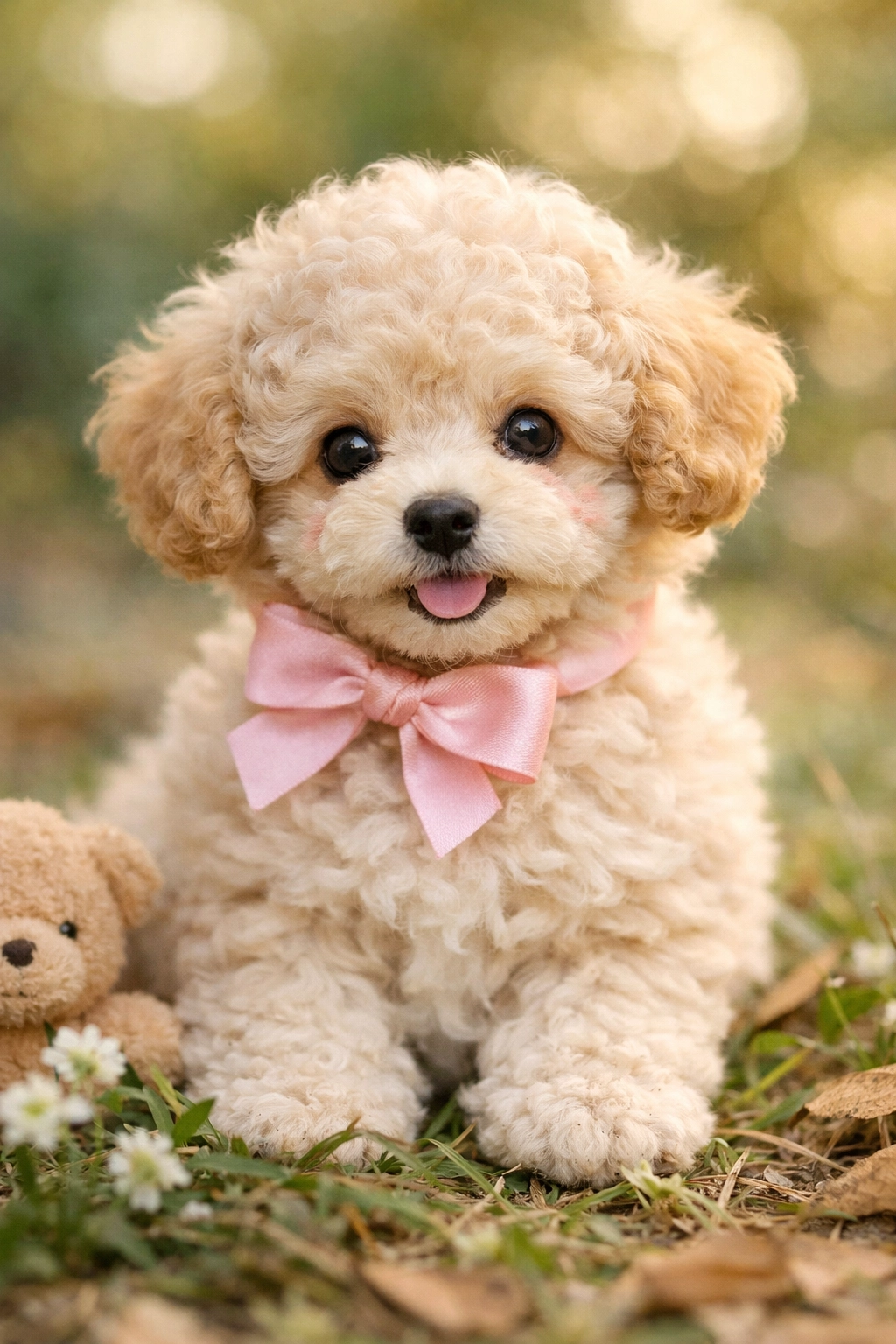
Poodle
"Do not let the elegant haircut fool you. Behind the sculpted pom-poms and the show-ring posture lives one of the most emotionally intelligent animals on the planet. Poodles consistently rank among the top two or three dog breeds in working intelligence, but what truly sets them apart is something that cannot be measured on an obedience test: their almost psychic sensitivity to human mood.
A Poodle knows when you are sad before you do. They will pad quietly to your side, lay their head on your knee, and simply be there — no fuss, no demands, no expectation of play — just presence. When you are joyful, they explode into the room like a creature made entirely of happiness, spinning and leaping and making everyone around them laugh whether they want to or not.
They were originally bred as water retrievers in Germany — hardy working dogs who leaped into cold rivers to retrieve waterfowl. The iconic pom-poms were not decorative; they protected the joints from cold water while the shaved body allowed freedom of movement. This history of intelligence, athleticism, and joyful service lives on in every Standard, Miniature, and Toy Poodle alive today. When a Poodle chooses you as their person, they are all in — completely, irrevocably, and magnificently.

CANINES · Animal Kingdom · WCN
Mixed-Breed Dog
"There is a love that only comes from an animal that has known abandonment and chosen, despite everything, to trust again. The mixed-breed dog — the mutt, the rescue, the dog of unknown origin — carries within its gentle eyes a story of survival, resilience, and a capacity for gratitude that is almost too beautiful to bear.
Science has shown that mixed-breed dogs often benefit from what geneticists call "hybrid vigor" — a natural genetic diversity that frequently results in fewer inherited diseases and longer, healthier lives than many purebreds. But that is the science. The truth that anyone who has ever rescued a mixed-breed dog will tell you is something simpler and far more profound: they know they were saved.
They remember the cold. They remember the hunger. And they will spend every remaining day of their lives paying it back — with their whole hearts, with every wag of their tails, with the way they watch your face as though you are the most important thing that has ever existed in the history of the universe. Because to them, you are. You are the person who chose them when no one else did. And a dog never, ever forgets that.
CANINES · Animal Kingdom · WCN
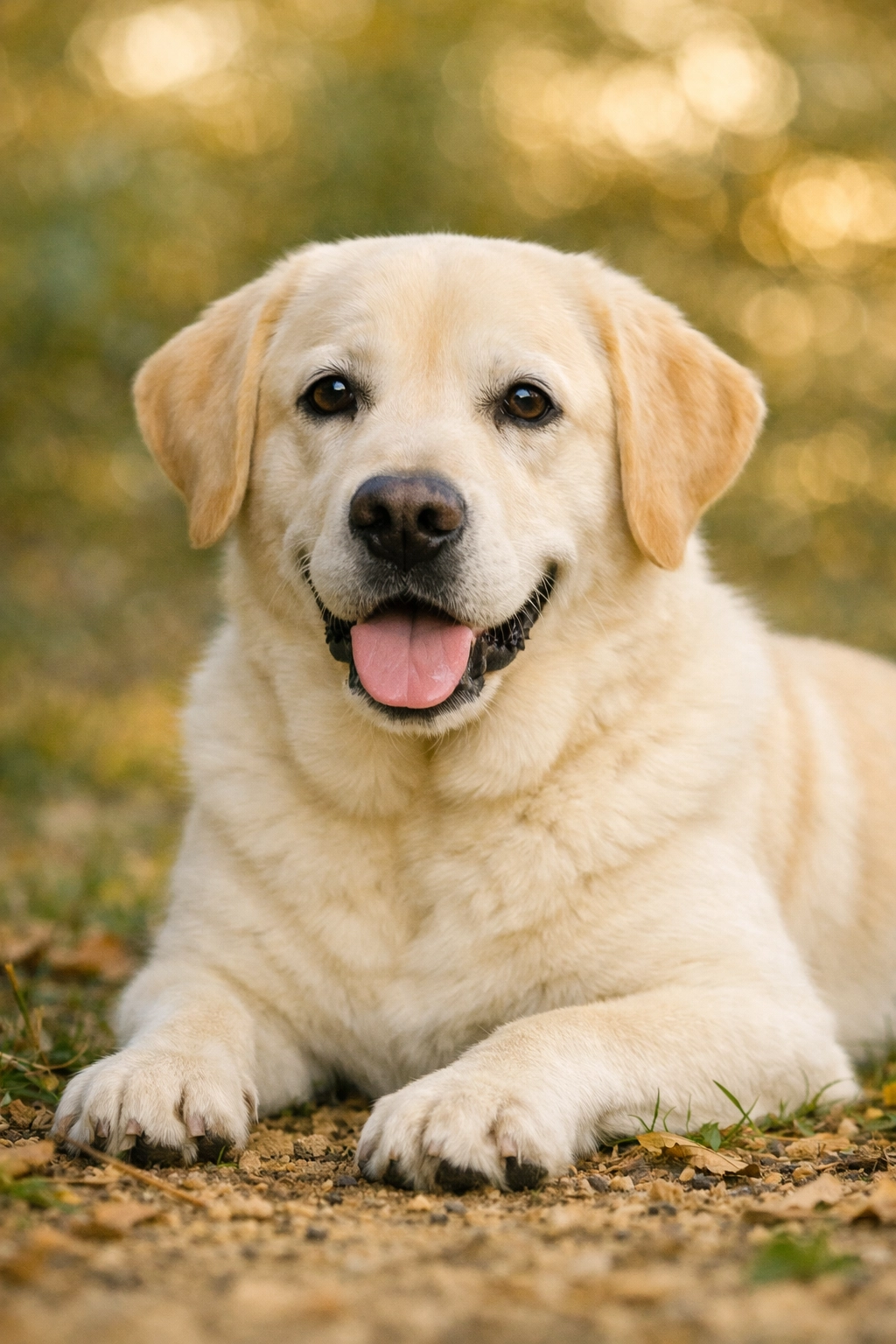
Labrador Retriever
"For over thirty consecutive years, the Labrador Retriever has been the most popular dog breed in the United States. That is not a coincidence. It is a testament to a personality so warm, so generous, so endlessly good-natured that it is almost impossible to believe it is not being performed.
Labradors were originally bred by fishermen in Newfoundland, Canada — dogs that leaped into icy Atlantic waters to retrieve fishing nets, work that demanded both physical strength and a temperament so steady and calm that they could function in freezing chaos without panic. That heritage lives in every Labrador alive today: a bone-deep steadiness, a willingness to work, and a heart that never hardens.
They are the preferred breed for guide dogs, search and rescue dogs, therapy dogs, and assistance dogs for people with disabilities — because their combination of intelligence, trainability, and infinite patience makes them uniquely suited to serve humans in their moments of greatest vulnerability. A Labrador will sit beside a child having a seizure. They will guide a blind person through a crowded city. They will find survivors in the rubble of earthquakes. And then they will come home, wag their tail, and ask only for a belly rub and a kind word. The Labrador Retriever is, quite simply, goodness in dog form.

CANINES · Animal Kingdom · WCN
Border Collie
"A Border Collie named Chaser learned the names of 1,022 individual objects — the largest tested vocabulary of any animal in history. Another Border Collie, Rico, demonstrated the ability to learn new words by a process of elimination, a cognitive skill previously thought unique to human children learning language. These are not tricks. These are glimpses into a mind operating at a level of sophistication that continues to stun researchers worldwide.
But the Border Collie's most extraordinary gift is not their intelligence — it is their emotional attunement. Developed over centuries of herding sheep in the borderlands between Scotland and England, the Border Collie learned to read the posture, breathing, and gaze direction of both their human shepherd and their flock simultaneously — adjusting their behavior in real time without verbal commands. This capacity for reading the invisible language of body and emotion has transferred seamlessly into their role as companions.
A Border Collie knows when their person is anxious before the person acknowledges it themselves. They read the room with the precision of a psychologist and the devotion of a best friend. They ask one thing in return: to be given a job worthy of their extraordinary mind. Give them purpose, and they will give you everything.
CANINES · Animal Kingdom · WCN
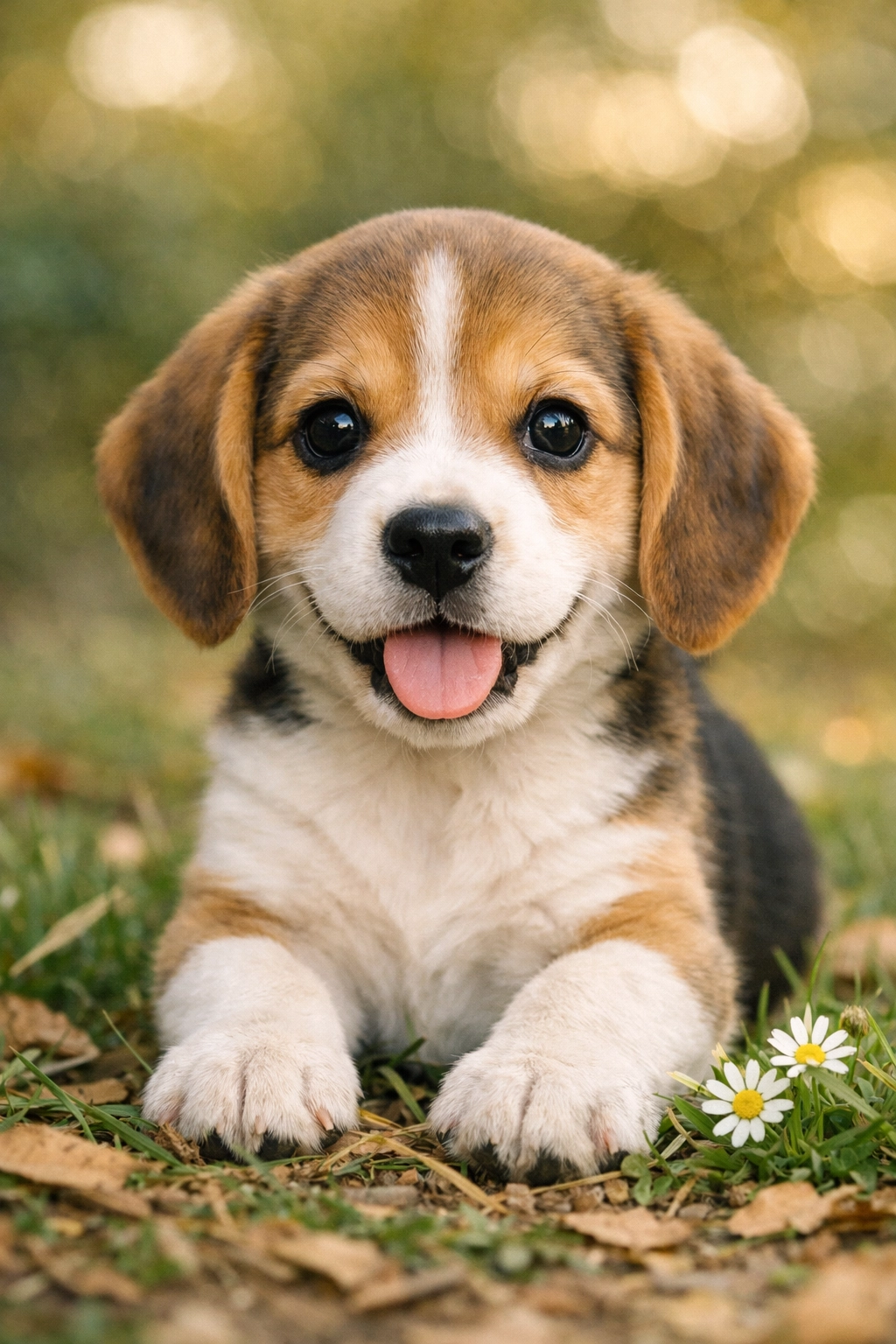
Beagle
"There is a word in the English language — "merry" — that is used almost exclusively in breed descriptions to describe the Beagle, and once you have met one, you understand exactly why. The Beagle does not walk into a room; it bounces. It does not greet you; it celebrates you. Its entire existence seems to be a sustained, unreserved declaration of the fact that life is good, you are wonderful, and everything — everything — is a potential adventure.
Originally bred in England for small-game hunting, Beagles were developed to work in packs, which gave them their extraordinarily social, pack-oriented temperament. They are happiest in company — human or canine — and suffer genuinely when left alone for long periods. Their bay — that melodious, ancient hound-song — is one of the most distinctive sounds in the animal kingdom, a sound bred into them over centuries to carry across hills and valleys to guide hunters home.
Snoopy, the world's most beloved cartoon character, is a Beagle — and the choice was not accidental. The Beagle embodies something universally cherished: a joyful, philosophical, somewhat daydreaming soul who finds wonder in the ordinary and meets every obstacle with a good meal and an undamaged spirit. Owning a Beagle is less like having a pet and more like having a small, perpetually cheerful philosopher living in your house.

Evolution · History · Human Bond
FELINES
The Predators That Conquered the Home
Unlike every other domesticated animal on Earth, the cat was never truly tamed — it domesticated itself. Around 10,000 years ago, as the first agricultural civilizations began to store grain in the Fertile Crescent, an ecological opportunity appeared: wherever humans stored food, rodents came. And wherever rodents came, the African wildcat followed.
These wildcats — Felis lybica, a species barely distinguishable from today's domestic cat — discovered that living near humans was extraordinarily profitable. Abundant prey, warmth, and relative safety. Humans, in turn, discovered that a cat in the granary meant no rats in the grain. It was a perfect, wordless arrangement.
But here is what makes cats remarkable: they chose this. No human captured wild kittens and selectively bred them for docility over generations, as happened with dogs, cattle, and horses. The cats that were less fearful of humans simply reproduced more successfully in human environments. Gradually, over thousands of years, the cats that remained were the ones with the temperament to tolerate — and eventually to seek — human company.
Today's domestic cat carries the full genome of a wild predator. When your cat stalks a piece of string across the floor with absolute focus, flattening their body, twitching their tail, dilating their pupils — you are watching 60 million years of predatory evolution in perfect miniature action. The fact that this apex predator then climbs into your lap and purrs is not domestication. It is a daily act of wild, sovereign, freely given love.

FELINES · Animal Kingdom · WCN
Ragdoll
"The Ragdoll cat was developed in the 1960s in California by a breeder named Ann Baker, who noticed that a particular white cat named Josephine produced kittens with an unusual and remarkable trait: when you picked them up, they went completely limp — totally relaxed, totally trusting, totally surrendered to the arms that held them. She named the breed Ragdoll, and the name has been perfectly accurate ever since.
Ragdolls are among the largest domestic cat breeds, with males often reaching 20 pounds or more. Yet despite their size, they are the gentlest of creatures — inclined toward floor-level activity rather than high-shelf adventures, preferring a warm lap to any perch. They follow their favorite humans from room to room with quiet, devoted attention, not demanding but present — a calm, breathing testament to the possibility of pure contentment.
They have been described as "puppy-like" in their social behavior — they will greet you at the door, learn their names, and often come when called. Their eyes, typically a deep and luminous blue regardless of coat color, seem to contain in them something ancient and knowing. To hold a Ragdoll — to feel that warm weight go soft and trusting in your arms — is to understand something wordless about what it means to be chosen by a creature that never had to choose you.

FELINES · Animal Kingdom · WCN
Maine Coon
"The Maine Coon is a creature of magnificent contradictions: enormous and gentle, wild-looking and deeply domestic, fiercely independent and profoundly social. One of the oldest natural breeds in North America, the Maine Coon developed in the harsh winters of New England — their thick, water-resistant coat, tufted ears, and enormous paws (which act as natural snowshoes) are the physical evidence of centuries of adaptation to brutal cold.
Yet this rugged exterior houses one of the warmest personalities in the feline world. Maine Coons are often described by their owners as "dog-like" — a description that would offend any self-respecting cat, yet is undeniably accurate. They will follow you through the house. They will chirp — a distinctive, musical trill quite different from an ordinary meow — as a greeting. They will sit beside you, not on your lap necessarily, but always within arm's reach, always within the warmth of your presence.
They are particularly famous for their gentleness with children and their patience with other animals. In a multi-pet household, the Maine Coon is typically the peacemaker — large enough to assert authority, gentle enough to never use it. They play well into old age, maintaining a kitten-like enthusiasm for games and puzzles that makes every morning feel like a small celebration of life.

FELINES · Animal Kingdom · WCN
Siamese
"The Siamese cat has been described as "the most opinionated cat in the world," and any Siamese owner will tell you this is not an exaggeration — it is a severe understatement. The Siamese does not merely vocalize; it holds entire, extended, emotionally complex conversations, with a voice that ranges from plaintive whisper to urgent declaration, all of it directed at you, all of it meaningful, all of it demanding a response.
Sacred in ancient Siam (present-day Thailand), Siamese cats lived in royal palaces and temples, where they were believed to carry the souls of deceased royalty and monks. Their striking coloring — creamy body with dark points on the face, ears, paws, and tail — was said to be caused by the heat of the palace fire warming their extremities. This is actually close to scientific truth: the Siamese coat is temperature-sensitive, and the cooler extremities of the body do develop the characteristic darker coloring.
What defines the Siamese beyond all else is their devotion. They choose one person — sometimes one family — and they love with a completeness that is almost uncomfortable in its intensity. They will follow you to the bathroom. They will wait outside the shower. They will insert themselves into every activity, every meal, every phone call, every moment of your day with the absolute conviction that your life is fundamentally incomplete without their presence in it. And having known a Siamese, it is very difficult to argue that they are wrong.

FELINES · Animal Kingdom · WCN
Persian
"The Persian cat is the philosopher of the feline world — a creature of magnificent stillness in a culture that has forgotten the value of being quiet. While other cats sprint and leap and investigate, the Persian tends to find the most comfortable surface in the room and arrange themselves upon it with the serene authority of someone who has understood, at a very deep level, that rushing is overrated.
Persians have been the companions of royalty, artists, and aristocrats for centuries — their long, luxurious coats and broad, peaceful faces appearing in portraits of the Ottoman Empire and the courts of Victorian England. Florence Nightingale owned 60 cats over her lifetime, many of them Persians. Marilyn Monroe was given a white Persian cat by actor Montgomery Clift. Their association with refinement, beauty, and tranquility is not accidental; the Persian embodies, in fur and whisker, the aesthetic of serene grace.
But their quietness is not indifference. The Persian watches everything with those extraordinary, round, copper-colored eyes — taking note of moods, routines, the subtle changes in your posture and breathing that tell them whether today is a day for company or for respectful distance. They express love not through words or grand gestures but through the quiet act of choosing, again and again, to be in your presence. To be chosen by a Persian is to be seen, gently, without judgment, by one of the oldest and most beautiful companions humanity has ever known.

FELINES · Animal Kingdom · WCN
Domestic Shorthair
"The domestic shorthair is the most common cat in the world, and perhaps because of this, the most underestimated. They arrive in our lives from shelters and streets and neighbors' litters with no pedigree, no documented ancestry, no certificate of breed purity — only a pair of eyes full of cautious hope and a history of survival that deserves far more reverence than it typically receives.
Every rescue cat carries a before. A before of hunger, or cold, or a carrier left on a highway overpass, or a cardboard box in a parking lot. And then there is the after — the after of your house, your warmth, your voice saying their name for the first time. The transformation that occurs in a rescued cat, over weeks and months of gentle, consistent love, is one of the most quietly miraculous things a human being can witness: the gradual, tentative unfurling of trust from an animal that had every reason to never trust again.
The domestic shorthair that chooses your lap, that headbutts your hand in the morning, that purrs with a frequency proven by research to promote bone healing and reduce stress — this cat has made an active, informed, hard-won choice to love you. They know what the alternative looks like. They chose this instead. There is no greater gift that any living creature can give.

Evolution · History · Human Bond
BIRDS & SMALL COMPANIONS
Dinosaurs in the Garden
65 million years ago, an asteroid struck the Yucatan Peninsula and ended the Cretaceous period in fire and darkness. The great sauropods, the tyrannosaurs, the horned and armored giants — they all vanished. But one lineage of theropod dinosaurs survived, and they survived by taking to the air. These were the ancestors of every bird alive today.
Think about that the next time a cockatiel lands on your shoulder and sings in your ear. You are hosting a direct descendant of dinosaurs — a creature whose lineage stretches back through 250 million years of evolutionary history, through mass extinctions and continental drift and ice ages, to arrive at this moment, in your home, choosing you.
Birds have evolved alongside humans for thousands of years, their songs embedded in our mythology, their feathers in our ceremonial dress, their presence in our earliest poems and paintings. Ancient Egyptians kept pigeons as messengers and companions. The Romans kept nightingales in cages of gold. Indigenous cultures across every continent have developed profound spiritual and practical relationships with birds.
The small companions — the cockatiels, canaries, rabbits, and guinea pigs — bring into our homes something irreplaceable: the daily reminder that life is larger than our own species, that joy takes infinite forms, and that the gentle weight of trust from a small creature is among the most moving experiences available to a human heart.
BIRDS & SMALL COMPANIONS · Animal Kingdom · WCN
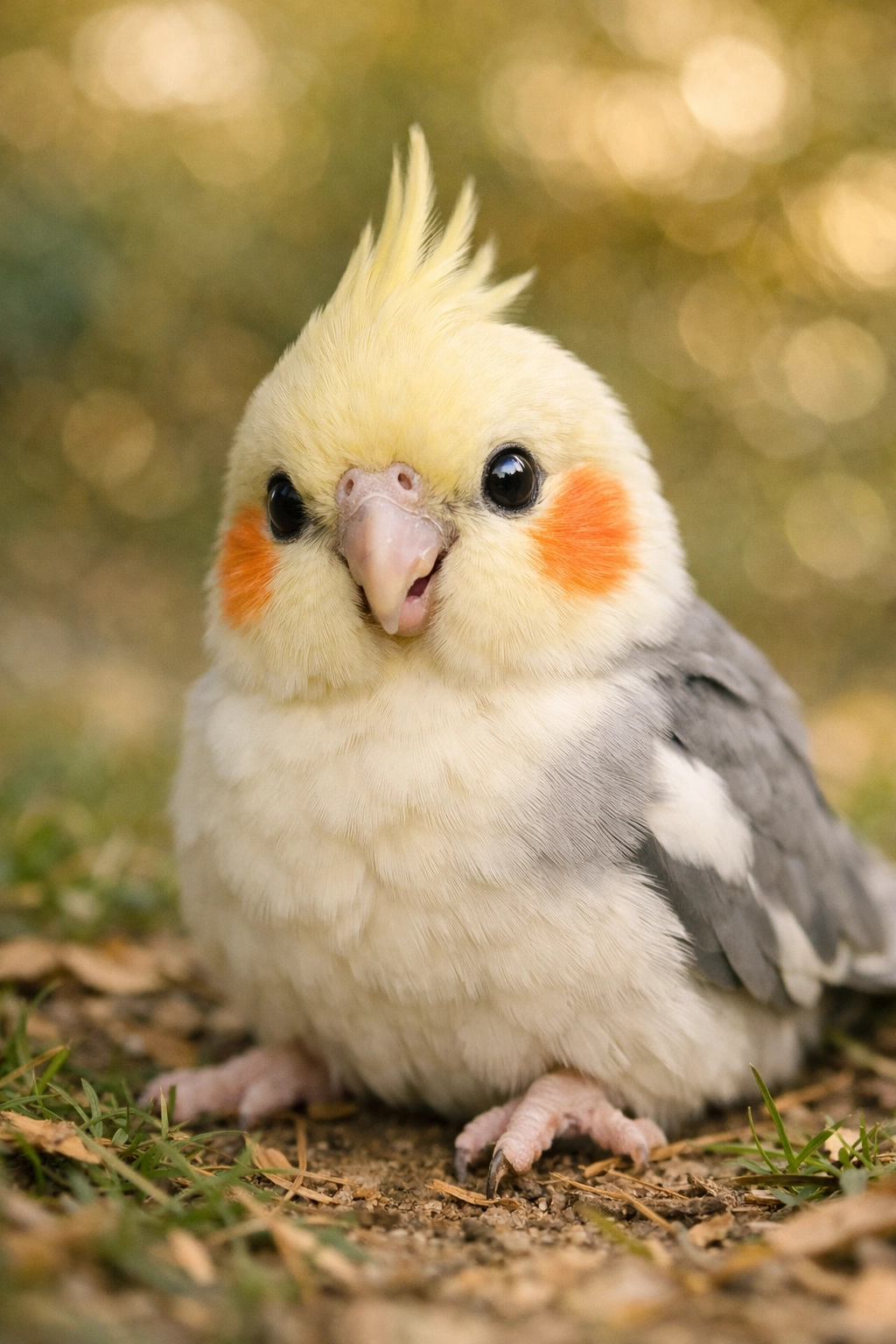
Cockatiel
"The cockatiel is one of the most emotionally expressive birds in the world — a creature whose every mood is broadcast in the position of their crest, the dilation of their pupils, the particular quality of their whistle, and the angle at which they tilt their extraordinary head to regard you. Owning a cockatiel is, in many ways, like having a tiny, feathered person living in your house — one who has strong opinions about music, definite preferences in people, and an absolute conviction that your shoulder is the most desirable real estate on Earth.
Native to Australia, cockatiels live in flocks in the wild, which means they are deeply social by nature and genuinely suffer from loneliness. A cockatiel bonded to their owner will follow them from room to room, call for them when separated, and greet their return with a song of unmistakable joy. They learn the sounds of their household — the particular ring of your phone, the sound of your car in the driveway, the specific whistle you use to call them — and incorporate these sounds into their repertoire as evidence of belonging.
Their ability to mimic is not mimicry for performance — it is communication. When a cockatiel whistles back the tune you taught them, or calls your name in the voice they have decided sounds most like "you," they are doing something profound: they are using the only language available to them to say, "I know you. You are mine. I am yours."
BIRDS & SMALL COMPANIONS · Animal Kingdom · WCN
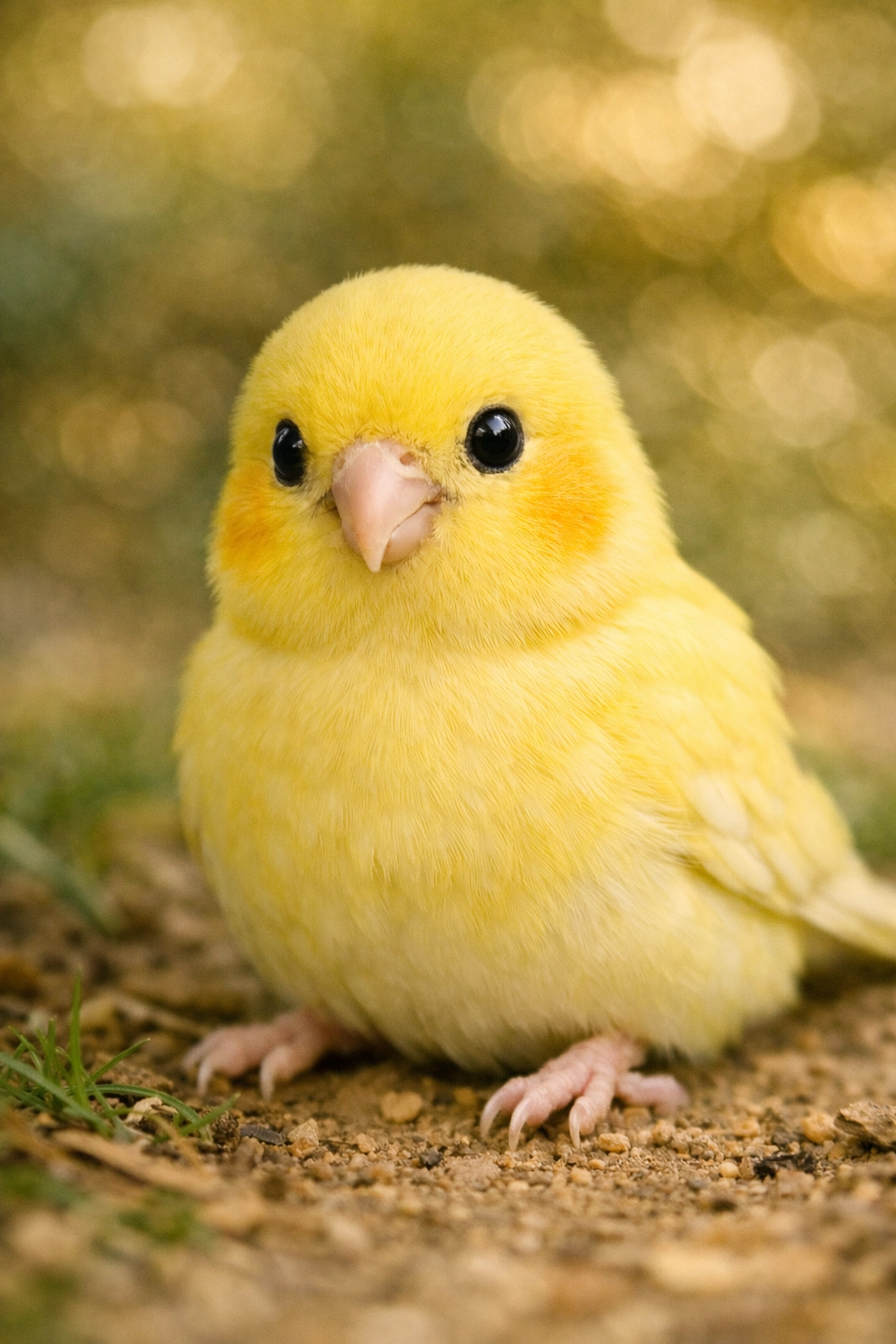
Canary
"The canary's song is one of the most complex and beautiful sounds produced by any living creature. A single male canary can produce up to 30 distinct phrases, each one a sequence of precise notes and rhythms that demonstrate levels of neural complexity comparable to human language processing. Researchers studying birdsong have learned fundamental principles of motor learning from the canary — principles that have since been applied to the rehabilitation of stroke patients relearning to speak.
Originally from the Canary Islands (named for the dogs once found there — canis in Latin — not the birds), wild canaries were first brought to Europe in the 15th century by Spanish sailors. For centuries, miners carried canaries into the mines as living air-quality monitors — the "canary in the coal mine" entered the language as a metaphor precisely because these birds were trusted with human lives. Their sensitivity made them guardians.
Today, the canary's role is purely one of companionship and healing. Research has demonstrated that exposure to birdsong reduces cortisol levels, lowers blood pressure, and improves mood with measurable consistency — effects that persist even with recordings, but are strongest with a living, singing bird present in the room. The canary does not require handling, does not need extensive training, and asks only for clean water, fresh seed, and the simple courtesy of your attention. In return, it fills your home with one of the oldest, most beautiful sounds on Earth.

BIRDS & SMALL COMPANIONS · Animal Kingdom · WCN
Netherland Dwarf Rabbit
"The Netherland Dwarf rabbit is, by objective visual assessment, almost impossibly cute — a compact, rounded body with an enormous head, tiny upright ears, and eyes so large and dark they seem to contain the universe. They weigh between 1.1 and 2.5 pounds at adulthood, making them among the smallest rabbit breeds in existence, yet they carry within their tiny frames a personality of extraordinary depth and complexity.
Rabbits are often misunderstood as passive, low-maintenance pets. The reality is precisely the opposite — they are highly intelligent, deeply social animals with complex emotional lives that include genuine bonding, jealousy, grief, and joy. A Netherland Dwarf that trusts you will binky — leap into the air and twist their body in a spontaneous expression of pure happiness that is among the most delightful things in the animal kingdom. A Netherland Dwarf that does not trust you will thump, scratch, and make their displeasure unmistakably clear.
Earning the trust of a Netherland Dwarf is a patient, gradual, deeply rewarding process. It requires sitting on the floor at their level, allowing them to approach on their own terms, offering treats with an open palm, and simply being present without demand. When they finally choose to approach, to nose your hand, to settle beside you in the warm circle of your presence — you understand that this is not domesticity. This is diplomacy between species, and it is one of the most touching negotiations available to a human heart.
Birds & Small Companions · Animal Kingdom · WCN
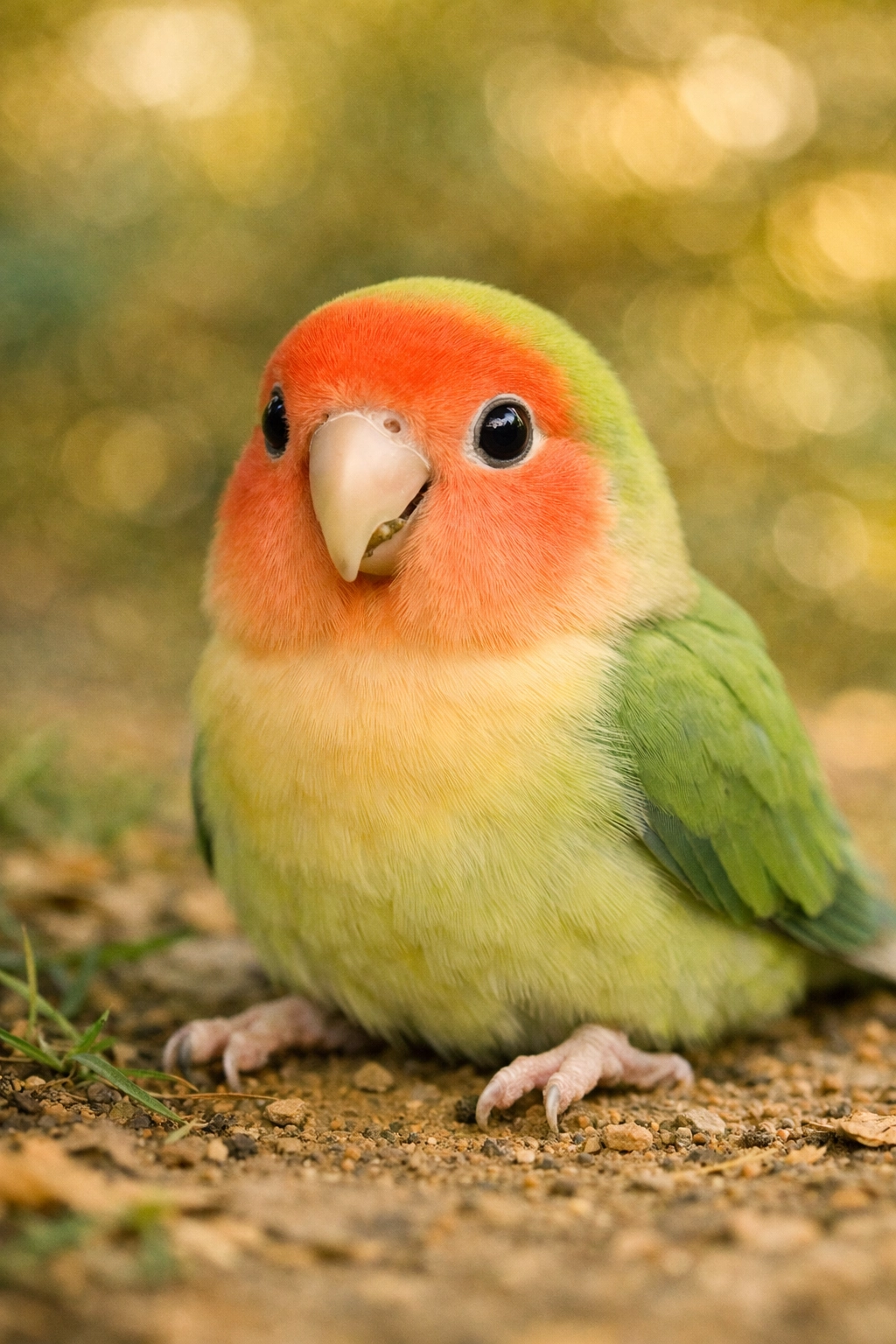
Lovebird
"
The lovebird's name is not poetic license — it is a precise biological description.
Agapornis, the genus name, comes from the Greek agape (love) and ornis (bird).
These small, brilliantly colored parrots from sub-Saharan Africa form pair bonds
of extraordinary intensity, spending up to 80% of their waking hours in physical
contact with their chosen partner — preening each other, sleeping pressed together,
feeding beak-to-beak in a gesture so tender it gave rise to the human expression
"lovebirds" as a term for devoted couples.
When a lovebird loses their partner — to death or separation — they enter a period
of visible mourning: reduced appetite, decreased activity, persistent calling for
the absent companion. Wildlife researchers describe this behavior not as instinct
but as grief — a word that implies an inner life rich enough to register loss.
Lovebirds kept alone without sufficient human interaction can develop anxiety and
depression, because they are not wired for solitude. They are wired, at the most
fundamental biological level, for devotion.
A lovebird that bonds with a human owner — particularly one raised from a young age
with consistent, gentle handling — will transfer the full intensity of that pair-bond
instinct onto their person. They will preen your eyebrows. They will tuck themselves
inside your shirt collar for warmth. They will call for you specifically, using a
contact call they develop uniquely for you, and when you answer, they will answer
back — a conversation in pure sound between two creatures of entirely different
species, held together by something that has no better name than love.

BIRDS & SMALL COMPANIONS · Animal Kingdom · WCN
Guinea Pig
"The guinea pig — cavia porcellus — is an animal that seems to have been designed specifically for the purpose of communicating joy. Their vocabulary of sounds is extraordinary in its range and expressiveness: the purr of contentment when held and stroked; the "wheek" — a high, piercing squeal of excitement at the sound of a refrigerator opening or the rustle of a vegetable bag; the bubbling, chattering "rumblestrutting" of social negotiation; and the extraordinary phenomenon known as "popcorning" — a spontaneous leap and twist that occurs when a guinea pig is simply too happy to remain in contact with the ground.
Originally from the Andes mountains of South America, guinea pigs were domesticated by the Inca civilization over 3,000 years ago — not as pets initially, but as a food source and ceremonial animal. Spanish explorers brought them to Europe in the 16th century, where their gentle temperament and vocal expressiveness made them immediate favorites as companions, particularly for children.
Research published in peer-reviewed journals has demonstrated that interaction with guinea pigs significantly reduces cortisol levels and increases oxytocin in children with autism spectrum disorder — findings that have led to their incorporation into therapeutic settings worldwide. Their calm, predictable, warm nature; their size that makes them manageable for small hands; their voices that seem always to be saying, with great enthusiasm, that everything is fine and also is that a carrot — make the guinea pig one of the most genuinely healing small animals a human being can share their home with.

Evolution · History · Human Bond
WILDLIFE & FAUNA
The Bridge of Absolute Trust
There are moments — rare, extraordinary, humbling — when the boundary between the human world and the wild world dissolves entirely. A wild elephant approaches a human with quiet curiosity and gently touches their face with its trunk. A dolphin surfaces beside a struggling swimmer and guides them to shore. A horse lowers its enormous head into the lap of a grieving child and simply stays there, breathing, warm, present.
These are not accidents. They are not anomalies. They are evidence of something that wildlife researchers, conservationists, and sanctuary workers have known for decades: that many of the animals we have labeled "wild" possess emotional and cognitive lives of extraordinary richness, and that under conditions of mutual respect and safety, they will choose to extend their social worlds to include us.
The animals in this section are not domesticated. They have not been bred over thousands of generations to seek human company. Their trust, when it exists, is hard-won, freely given, and therefore carries a weight that no domestic animal bond can quite replicate. When a wild animal chooses you, it is perhaps the most humbling and clarifying experience available to a human being — a reminder that we are not separate from nature, that we were never separate from it, and that the healing available in the company of animals who have every reason to flee but choose instead to stay is one of the greatest and most undervalued medicines on Earth.

WILDLIFE & FAUNA · Animal Kingdom · WCN
The Elephant
"The elephant brain is remarkably similar to the human brain in its structure, its complexity, and the regions associated with memory and empathy. Elephants have been observed returning to the bones of deceased family members years after death — touching them with their trunks, standing in apparent reverence, engaging in behaviors that researchers describe, carefully and with scientific caution, as mourning.
They recognize themselves in mirrors — one of only a handful of species on Earth to demonstrate this capacity for self-awareness. They use tools. They comfort distressed companions with touches and vocalizations. They have been observed apparently grieving with other species — standing for hours beside the body of a rhinoceros killed by poachers, as though bearing witness.
In sanctuaries across Africa and Asia, the bonds that form between elephants and their long-term caregivers are among the most moving relationships in the animal world. Elephants remember the people who cared for them years or even decades after separation. There are documented cases of sanctuary elephants traveling miles to seek out a caregiver they had not seen in years, greeting them with trumpet calls and extended trunk touches — greeting them, there is no other word for it, with joy.
The elephant asks of us only what it offers: memory, loyalty, and the fundamental decency of being treated as a creature whose inner life is real, complex, and worthy of protection.

WILDLIFE & FAUNA · Animal Kingdom · WCN
The Horse
"The horse is a prey animal. Every instinct honed by 55 million years of evolution tells the horse that sudden movements mean predators, that enclosed spaces mean danger, and that the most important skill available to a living creature is the ability to flee. The fact that a horse will choose to stand still and allow a human to climb onto their back — an act that triggers every alarm in their evolutionary architecture — is an act of trust so profound that it has been used therapeutically for over a century to treat trauma, anxiety, autism, and PTSD.
Equine-assisted therapy works not because horses are trained to be gentle (though they often are) but because horses, as prey animals with exquisitely sensitive nervous systems, respond directly and honestly to the emotional state of the human beside them. A horse cannot be fooled by a smile. They read your cortisol levels through subtle changes in your breathing, your posture, your heart rate, your skin temperature. When you are anxious, the horse is anxious. When you become calm — truly calm, not performed calm — the horse becomes calm. This biofeedback is instantaneous, honest, and more accurate than any therapeutic instrument.
For thousands of years, the horse carried humanity — across continents, into battles, through the fields that fed civilizations. They gave us geography, agriculture, and the possibility of speed. In return, we gave them domestication. Today, the exchange continues in a different register: they give us healing, and we give them care. It is a partnership written in the deepest pages of both our histories.

WILDLIFE & FAUNA · Animal Kingdom · WCN
The Dolphin
"Dolphins call each other by name. This was established by researchers at the University of St Andrews in a landmark study demonstrating that bottlenose dolphins develop individual signature whistles — unique acoustic identifiers — that function as names, and that they respond to the sound of their own name with clear recognition. They are among the few non-human animals on Earth that demonstrate this capacity.
They also demonstrate empathy, altruism, grief, play, tool use, and cultural transmission — the passing of learned behaviors from one generation to the next without genetic inheritance, which is the foundation of culture as we define it. Dolphins in one population in Western Australia have been observed using sea sponges to protect their rostrums while foraging on the seafloor — a technique used only in this group, taught by mothers to daughters, that has persisted for generations.
Dolphin-assisted therapy — carefully and ethically conducted in controlled environments — has produced remarkable outcomes for children with autism and neurological conditions, outcomes that exceed what can be explained by the simple novelty of an unusual experience. Researchers believe that the dolphins' echolocation — a sonar system of extraordinary sensitivity — may produce acoustic stimulation with measurable neurological effects. Whether this is the mechanism or not, the children who emerge from dolphin therapy sessions often demonstrate improvements in communication, attention, and emotional regulation that persist long after the sessions end. The dolphin, it seems, knows something about healing that we have not yet fully learned to translate.

WILDLIFE & FAUNA · Animal Kingdom · WCN
The Giant Panda
"The giant panda is, by the objective standards of evolutionary ecology, a deeply impractical animal. They are obligate herbivores in a body designed for meat-eating — their digestive systems remain fundamentally carnivorous despite a diet that is 99% bamboo, a food so nutritionally poor that they must eat between 26 and 84 pounds of it per day simply to sustain themselves. They are notoriously reluctant to reproduce in captivity. They are not particularly fast, not particularly strong, not particularly territorial.
And yet they have inspired the largest coordinated international wildlife conservation effort in human history. The giant panda became the symbol of the World Wildlife Fund in 1961 — chosen because their black-and-white coloring reproduced well in print — and through that symbol they became the face of the global conservation movement. Billions of dollars have been invested in their protection. International diplomatic relationships have been shaped around panda loans. The birth of a panda cub anywhere in the world is a news event.
Why? The panda's face — those enormous dark eye patches that create the impression of huge, sad eyes; the round, bearlike body; the slow, gentle movements — triggers in the human brain the same neurological response as an infant's face. We are biologically wired to find them precious. And in responding to that wiring by actually protecting them, we have inadvertently created vast protected habitat zones in China that shelter hundreds of other endangered species. The panda, in their magnificent impracticality, saved an entire ecosystem simply by being beautiful.

WILDLIFE & FAUNA · Animal Kingdom · WCN
The Prairie Dog
"The prairie dog speaks. Not metaphorically — literally. Researcher Con Slobodikoff spent 30 years studying the alarm calls of Gunnison's prairie dogs in Arizona and discovered that their vocalizations encode specific, detailed information: the size and shape of an approaching predator, its color, its speed of movement, and the direction of its approach. Different alarm calls produce different escape behaviors in the receiving animals — behaviors precisely calibrated to the specific threat described.
When Slobodikoff walked past a prairie dog colony wearing different colored shirts on different days, the animals produced different calls — calls that, when analyzed, contained acoustic information that corresponded to the color and shape of the shirt. The prairie dogs were describing him to each other. They were using language — rudimentary, functional, context-specific language — to communicate information about the world.
In sanctuary settings, prairie dogs that are raised with consistent, gentle human contact from an early age become remarkably affectionate companions — following caregivers with puppy-like enthusiasm, seeking physical contact, and "kissing" — pressing their lips to the lips of trusted humans in a greeting behavior they use with family members in their wild colonies. To be "kissed" by a prairie dog that has chosen to trust you is a small, extraordinary miracle: a reminder that intelligence, sociality, and the capacity for trust exist in forms we are only beginning to understand.